Varicose Veins Explained:
What They Are, Why They Happen, and the Warning Signs You Shouldn't Ignore
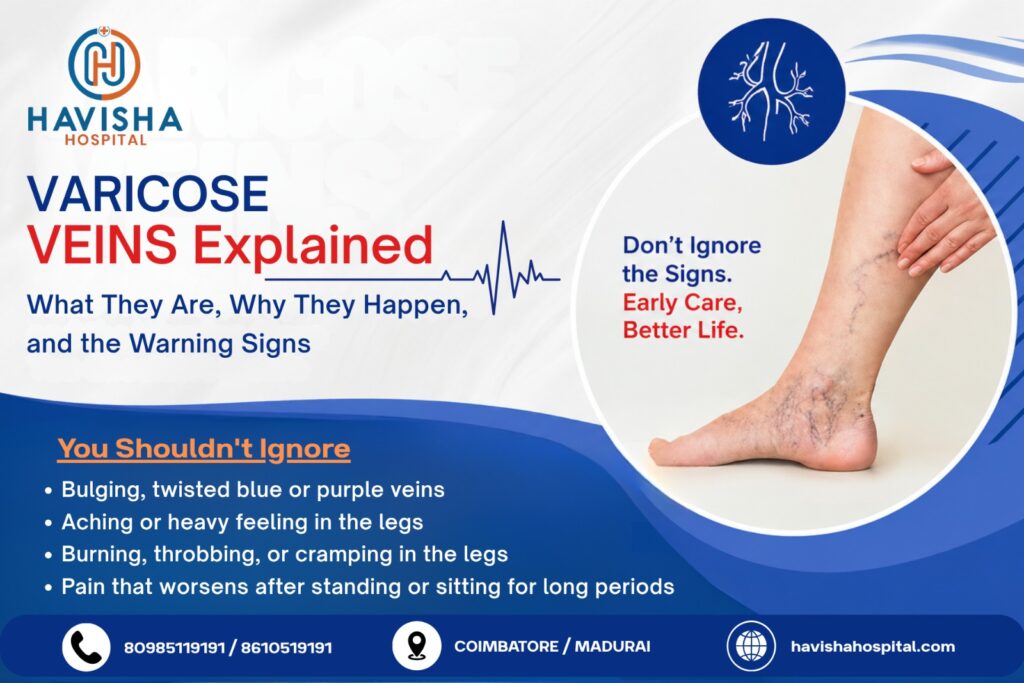
Varicose veins causes and symptoms are often misunderstood — even though the condition is one of the most common vein problems worldwide. If you’ve noticed a rope-like, bluish vein snaking up your calf, or a heavy, tired feeling in your legs by the end of the day, you’ve probably typed some version of “what are these veins in my leg” into Google.
How Your Leg Veins Are Supposed to Work
To understand what goes wrong, it helps to picture what’s supposed to happen. Every time you take a step, the muscles in your calf squeeze the deep veins running through them, pushing blood upward toward your heart. Because that blood is moving against gravity for most of the day, your veins rely on a clever piece of engineering: one-way valves, spaced along the length of each vein, that open to let blood through and then snap shut to stop it from sliding back down.
Think of it like a staircase of tiny trapdoors. Each contraction of your calf muscle pushes blood up one flight; the valve below closes so it can’t fall back down while you rest between steps. This “calf muscle pump” is doing most of the heavy lifting in returning blood to your heart — your heart’s pumping pressure alone isn’t enough to do the job from your ankles.
So What Actually Goes Wrong?
Varicose veins begin when one or more of those trapdoor valves stops sealing properly. Instead of closing fully, the valve leaflets stay slightly open, and a portion of the blood that was pushed upward slips back down and pools in the vein below it.
This backward leakage has a name in vascular medicine: venous reflux. It doesn’t happen all at once. Each time a valve leaks, a small amount of extra pressure builds up in the vein segment below it, which stretches the vein wall slightly.
Over months and years, that stretched, weakened wall makes it even harder for the next valve down to close properly — so the problem tends to cascade downward along the vein rather than staying contained to one spot. That’s why varicose veins often start as one visible bulge and gradually spread into a network of them.
The veins closest to the skin’s surface — the ones without much surrounding muscle to support them — are the most vulnerable to this stretching, which is exactly why varicose veins are visible rather than hidden deep in the leg.
Valve failure isn’t random. Several factors make it more likely:
Genetics loads the dice first. If a parent or sibling has varicose veins, the structural strength of your own vein walls and valves may be inherited along with everything else — this is considered one of the strongest predictors of who develops the condition.
Gravity and time are cumulative stressors. Valves are essentially mechanical parts that open and close thousands of times a day. Like any mechanical part, years of repeated use gradually wear them down, which is part of why varicose veins become more common with age.
Hormonal shifts change vein wall tone. Estrogen and progesterone both relax the smooth muscle in vein walls to some degree. This is one reason pregnancy, hormonal contraception, and menopause are commonly linked to new or worsening varicose veins — the vein wall itself becomes slightly less firm, making valve leaflets less likely to meet cleanly.
Pressure inside the abdomen matters more than people expect. Anything that raises pressure in the abdominal cavity — pregnancy, chronic constipation, persistent coughing, or carrying excess weight — pushes back against the upward flow of blood from the legs, adding extra load onto valves that are already working against gravity.
The calf pump only works when it’s used. Venous return depends on rhythmic muscle contraction — without it, the column of blood in your lower leg has nothing pushing it upward except residual pressure, so it simply sits and stretches whichever valve is holding it back. This is a purely mechanical point rather than a lifestyle one: any position that keeps the calf muscle inactive for an extended period removes the pump from the system, regardless of what that position is or why you’re in it.
Why Symptoms Feel the Way They Do
Each varicose vein symptom has a specific physiological cause, and understanding it explains why the symptoms show up in the order they do — usually well before a vein is visibly enlarged.
Heaviness and aching come from pressure, not muscle fatigue. When a valve leaks, the vein segment below it stays under higher-than-normal pressure for longer than it should. Vein walls contain nerve fibers that respond to sustained stretch, and it’s this stretch — not tired muscles — that produces the dull, heavy sensation by the end of the day.
Swelling around the ankle is a fluid-dynamics problem. Elevated pressure inside a refluxing vein pushes fluid out through the capillary walls into the surrounding tissue faster than the lymphatic system can drain it back. The ankle swells first simply because it’s the lowest point, where pressure from the column of blood above is greatest.
Nighttime cramping is linked to how the tissue around an overloaded vein handles the fluid and metabolic waste that builds up over the day. Lying flat shifts fluid distribution again, which can trigger involuntary muscle contraction — this is why cramping often appears specifically at night rather than during the day’s activity.
Itching or a burning sensation signals a different process: chronic pooling raises pressure in the smallest vessels near the skin, and over time this triggers a mild local inflammatory response. It’s an early version of the same process that eventually causes skin discoloration in more advanced cases — not a coincidental skin irritation.
Visible bulging appears last because it requires the vein wall itself to have stretched enough to be seen through the skin — a structural change, whereas the earlier symptoms are functional (pressure and fluid shifts) rather than structural. This is also why the presence or absence of a visible vein doesn’t reliably indicate how much reflux is actually happening underneath.
How Reflux Is Actually Measured
Symptoms alone can’t tell you how advanced venous reflux is — two people with identical aching and swelling can have very different amounts of valve damage underneath, which is why vein disease is diagnosed by measurement rather than by symptom checklist.
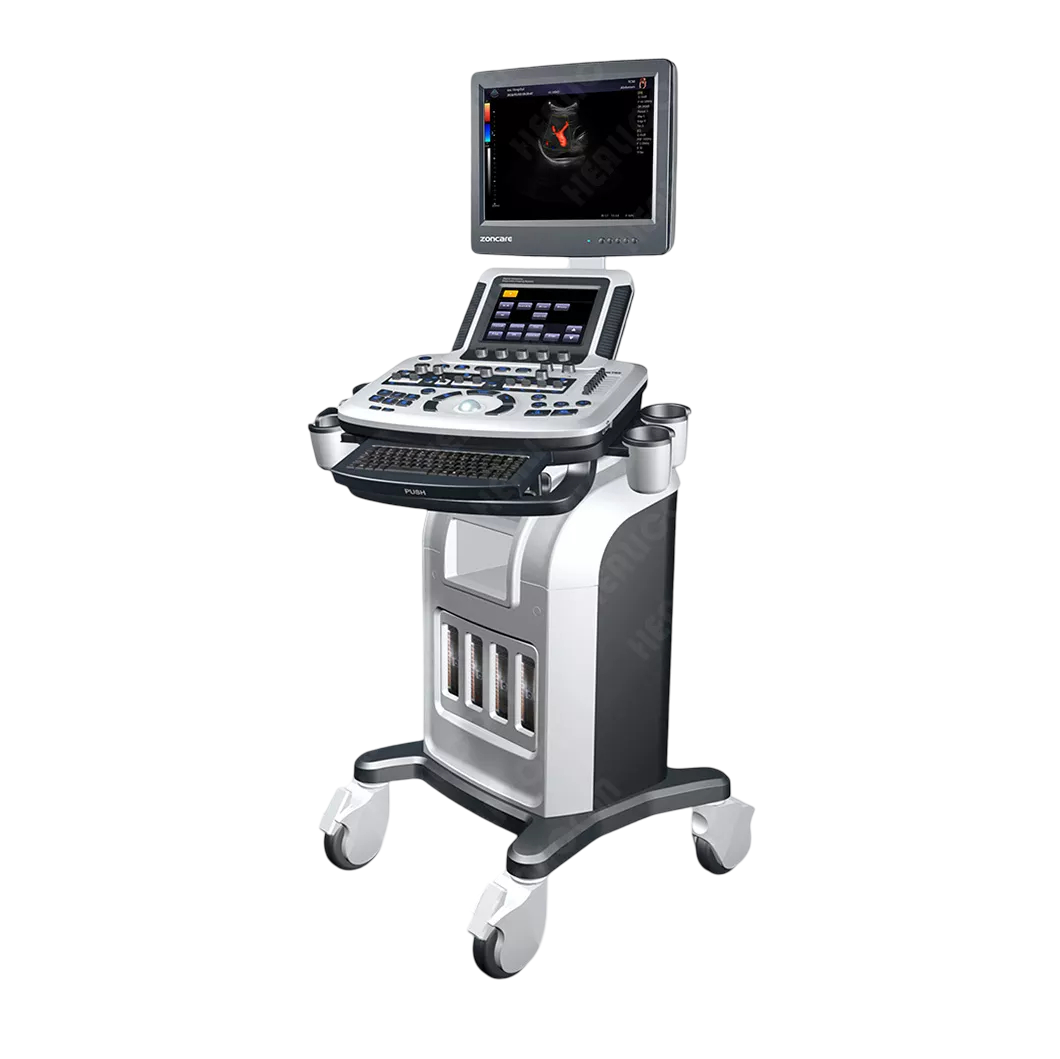
The tool for this is a Doppler ultrasound, and what it’s actually measuring is reflux time — how long blood flows backward through a valve before it manages to close. A healthy valve closes in well under a second; anything beyond roughly half a second of backward flow is generally classified as reflux, and the duration gives a rough indication of how much the valve has deteriorated. The scan also maps which veins are affected — superficial, deep, or perforating — because the mix of vessels involved changes both the risk profile and how the case should be classified.
This is also where the clinical staging system comes in: venous disease is typically graded from C0 (no visible signs) through C6 (active venous ulcer) based on physical findings, then correlated against the ultrasound’s reflux data. A vein that looks alarming on the skin can sometimes reflect a relatively contained valve problem, while a leg with barely visible veins can have significant reflux happening deeper in the system. That gap between what’s visible and what’s actually happening underneath is precisely why the ultrasound — not the appearance of the vein — is what determines the clinical picture.
Book a consultation with Havisha Hospital’s vein care team in Coimbatore or Madurai:
+91 86105 19191
Blog Posts
Frequently Asked Questions
Venous reflux is the backward flow of blood through a vein valve that isn’t closing properly. Instead of blood moving in one direction — up the leg toward the heart — some of it slips back down and pools above the next valve, raising pressure in that section of vein.
Valves fail when the vein wall around them loses tone and stretches, which prevents the valve leaflets from meeting fully in the middle. This stretching can be triggered by inherited wall weakness, hormonal changes, prolonged pressure from inactivity, or simply years of mechanical wear.
Yes. Reflux is a functional problem happening inside the vein, while a visible bulge is a structural change to the vein wall that develops later. It’s entirely possible to have measurable reflux on an ultrasound with legs that look completely normal.
The distinction comes down to vessel size and depth. Varicose veins are enlarged, often raised veins usually linked to reflux in the larger superficial or perforating veins. Spider veins are much smaller, flatter vessels near the skin’s surface, and while they can occur alongside reflux, they don’t always indicate the same underlying valve problem.
Almost always just one section of vein to begin with. Because pressure builds up locally below a failed valve, reflux tends to start at a single point and gradually extends to neighboring valves over time, rather than affecting the entire venous system simultaneously.
Genetics sets the baseline strength of the vein wall, but it isn’t the only pathway. Sustained pressure from pregnancy, prolonged immobility, or chronic abdominal pressure can weaken even a structurally normal valve over time — genetics changes the odds, but it isn’t a strict requirement.
Contact us
For more details
📍 Locations
Singanallur, Coimbatore, Tamil Nadu 641005
Tallakulam, Madurai, Tamil Nadu 625002
📞 Phone Numbers
+91 80985 19191
+91 86105 19191
🌐 Website
Book Your Consultation with Dr. Hari Hara Jothi Today
If you have been living with painful, swollen, or visible varicose veins — relief is closer than you think. Dr. Hari Hara Jothi offers expert, personalised, and minimally invasive varicose vein treatment in Coimbatore that fits your life.
Do not wait for a simple vein problem to become a serious complication.
Subscribe to Our Newsletter
Get expert tips on varicose vein treatment, vascular care, and the latest health updates from Havisha Hospital in Coimbatore & Madurai.

Havisha Hospital delivers advanced, patient-focused care with a commitment to safety, comfort, and faster recovery in Coimbatore and Madurai.
Treatments
Information
Phone Number
+91 86105 19191
Maill Address
havishahospital@gmail.com
Head Office
Singanallur, Coimbatore, Tamil Nadu 641005.
Tallakulam, Madurai Tamil Nadu 625002.