HAVISHA
HOSPITAL
Loading...

If you spend your day standing at a loom in Tirupur-Coimbatore’s textile belt, behind a retail counter in RS Puram, teaching in a classroom, or sitting through nine-hour shifts at an IT park in Saravanampatti, you may be doing more damage to your leg veins than you realise. Varicose veins aren’t just a cosmetic concern that shows up later in life — for a growing number of working professionals in Coimbatore, they’re an occupational issue that starts quietly in the late twenties and thirties.
This article looks at why certain jobs common in Coimbatore raise your risk, how to tell the difference between ordinary tiredness and a vein problem, and what your options look like if you do need treatment.
Veins in your legs rely on tiny one-way valves and the pumping action of your calf muscles to push blood back up to the heart against gravity. Two extremes interfere with this system:
Prolonged standing (factory floor work, retail, teaching, surgery/nursing, security staff) causes blood to pool in the lower leg for hours with little muscle movement to push it back up. Over years, the constant pressure stretches vein walls and weakens the valves.
Prolonged sitting (IT and BPO roles, call centres, drivers, desk-based government jobs) reduces calf muscle activity almost to zero. Blood flow slows, pressure builds in the lower leg veins, and the valves are put under sustained strain even though you’re not “on your feet.”
Coimbatore’s economy sits at an unusual intersection of both extremes — a large textile and manufacturing workforce that stands for long shifts, alongside a fast-growing IT and corporate services sector that sits for long shifts. Add Coimbatore’s warm climate, which encourages dehydration and mild swelling, and you have a population at genuinely elevated risk compared to many other cities.
While varicose veins can affect anyone, certain groups should be more watchful:
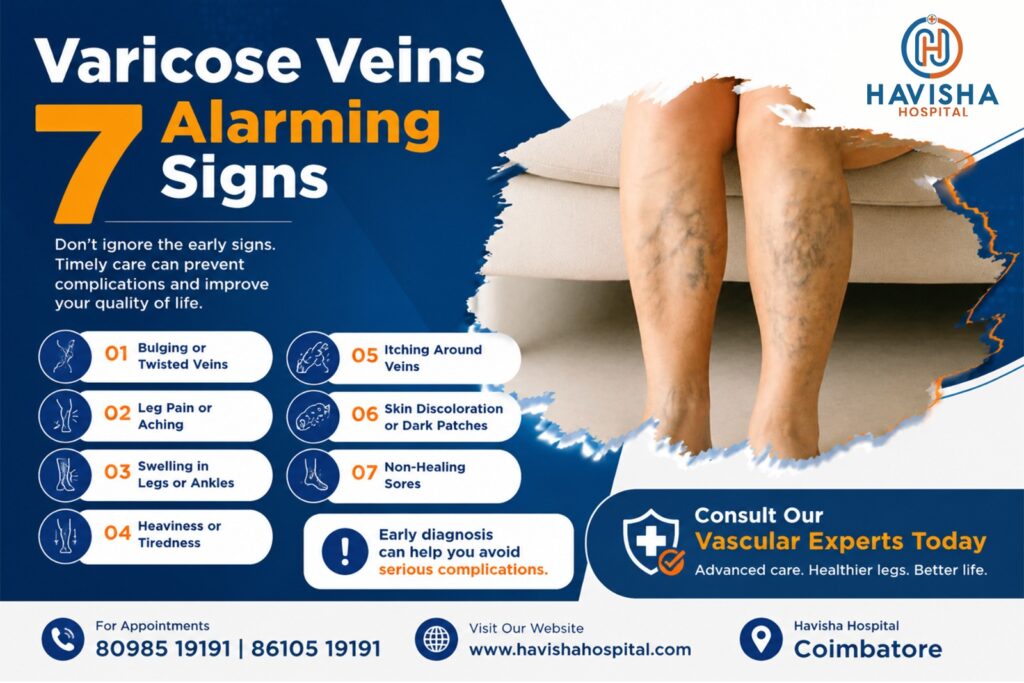
This is where most people in Coimbatore lose valuable time. Mild symptoms are brushed off as ordinary fatigue from a long workday, and the underlying vein problem is left to slowly progress. Watch for:
None of these are “just tiredness” if they happen consistently for weeks. They are early signals of venous reflux — blood flowing backward through weakened valves — and they tend to worsen gradually rather than resolve on their own.
Untreated venous reflux doesn’t stay cosmetic. Over months to years it can progress to visibly bulging varicose veins, skin discolouration and thickening around the ankle, and in more advanced cases, non-healing ulcers near the ankle or a higher risk of blood clots. The earlier the underlying valve problem is identified with a simple Doppler ultrasound, the simpler and less invasive the treatment tends to be.
Whether you stand all day or sit all day, a few habit changes meaningfully reduce strain on your leg veins:
These habits help manage mild symptoms and slow progression, but they do not reverse an already-weakened valve. If you’re noticing the early signs above on most days, that’s a signal to get a proper vein assessment rather than waiting it out.
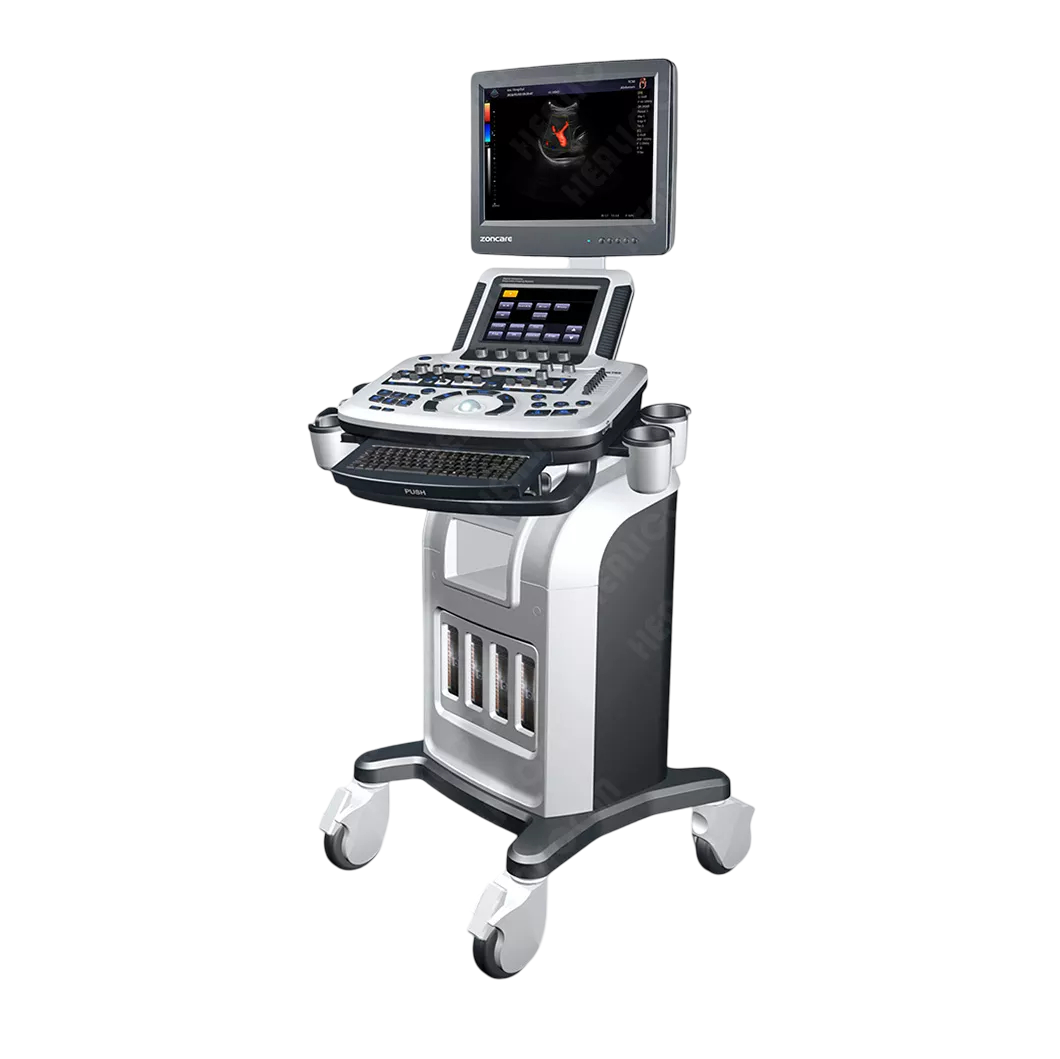
A good rule of thumb: if leg heaviness, visible veins, or evening swelling has been part of your routine for more than a month, it’s worth a 15-minute colour Doppler ultrasound to check whether reflux is present. This single scan tells a vein specialist exactly which veins are affected and how severe the problem is — and most people are surprised to learn that modern treatment doesn’t involve traditional surgery at all.
Patients consistently describe their experience as being treated like a person, not just a case number.
At Havisha Hospital’s varicose vein treatment clinic in Coimbatore, every consultation starts with this ultrasound mapping before any treatment is recommended. Depending on what it shows, options range from simple lifestyle and compression therapy for early-stage reflux, to walk-in-walk-out procedures like EVLT (laser), radiofrequency ablation, or ultrasound-guided foam sclerotherapy for more developed varicose veins — all done under local anaesthesia with same-day discharge.
Dr. Hari Hara Jothi V, who has performed over 2,000 vein procedures in Coimbatore, frequently sees this pattern: patients who attribute years of leg discomfort to “just standing too much at work” or “sitting too long,” when a treatable valve problem was the real cause all along.
Ask yourself honestly:
Two or more “yes” answers is a reasonable trigger to get a Doppler ultrasound rather than waiting for symptoms to worsen.
Your job doesn’t have to be the reason your legs suffer in silence. Whether you’re on a textile factory floor, behind a retail counter, or at a workstation in an IT park, understanding how your daily routine affects your veins — and catching the early warning signs — makes treatment simpler, faster, and far less invasive than waiting until the condition is advanced.
If you’ve recognised yourself in the symptoms above, a quick consultation and ultrasound assessment can tell you exactly where you stand.
With modern minimally invasive techniques like laser ablation and sclerotherapy, the procedures are performed under local anaesthesia and are virtually painless. Mild discomfort for a day or two is normal.
Most patients resume light daily activities within 24 hours and can return to work within 2 to 3 days. Strenuous physical activity is avoided for 1 to 2 weeks.
With proper treatment and lifestyle measures, recurrence is uncommon. Dr. Hari Hara Jothi’s precise technique and thorough pre-procedure mapping minimise the risk significantly.
No. In many cases, non-surgical options like laser ablation or sclerotherapy are highly effective. Surgery is reserved for complex or recurrent cases.
Treatment is generally deferred until after delivery. However, Dr. Jothi can recommend safe compression therapy and lifestyle guidance during pregnancy to manage symptoms.
Yes. Doppler ultrasound scanning is available at the clinic to ensure a complete evaluation in a single visit.
For more details
Singanallur, Coimbatore, Tamil Nadu 641005
Tallakulam, Madurai, Tamil Nadu 625002
+91 80985 19191
+91 86105 19191
If you have been living with painful, swollen, or visible varicose veins — relief is closer than you think. Dr. Hari Hara Jothi offers expert, personalised, and minimally invasive varicose vein treatment in Coimbatore that fits your life.
Do not wait for a simple vein problem to become a serious complication.
Get expert tips on varicose vein treatment, vascular care, and the latest health updates from Havisha Hospital in Coimbatore & Madurai.
Havisha Hospital delivers advanced, patient-focused care with a commitment to safety, comfort, and faster recovery in Coimbatore and Madurai.
+91 86105 19191
havishahospital@gmail.com
Singanallur, Coimbatore, Tamil Nadu 641005.
Tallakulam, Madurai Tamil Nadu 625002.